Why Do Quadruped Robots Use High-Rate Batteries?
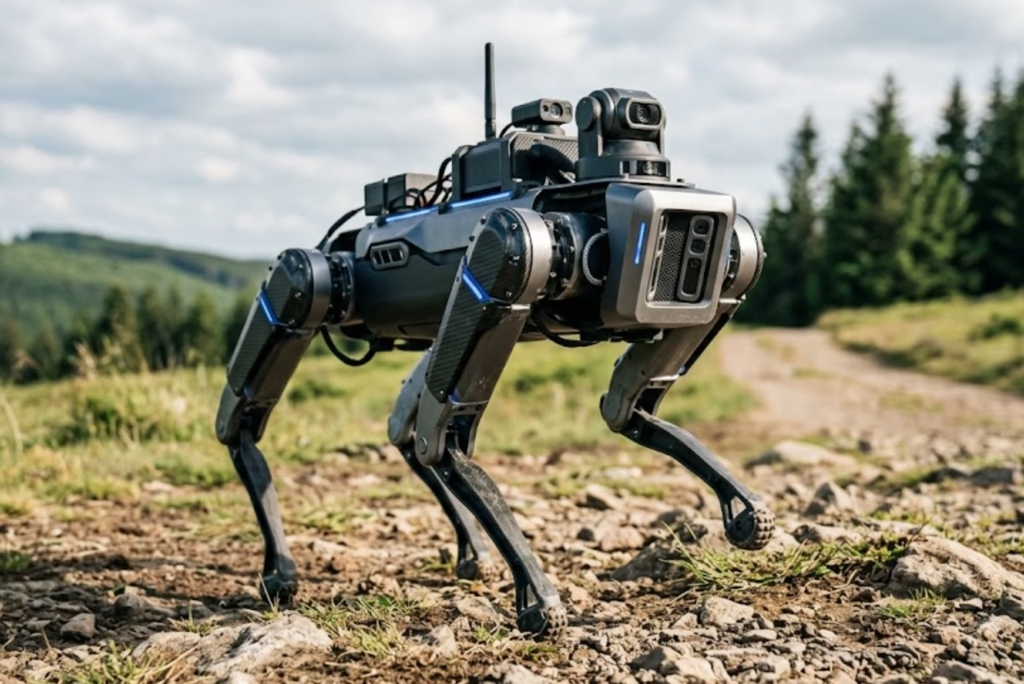
A quadruped robot is a machine with four or more legs, typically designed to perform tasks on uneven surfaces. By simulating the gaits and behaviors of animals like dogs, bears, or even snakes, these robots require robust battery support to power their movements. But why specifically do they need high-rate batteries? To understand this, we must first look at the fields where quadruped robots are applied.
Applications of Quadruped Robots
Quadruped robots are utilized in rescue, defense, healthcare, exploration, and mining.
-
Search and Rescue: They can navigate disaster sites to locate trapped individuals or clear debris. Their ability to move freely in complex terrains allows them to replace humans in hazardous environments, improving efficiency and safety.
-
Special Operations: In defense and security, they perform reconnaissance, scouting, and tactical tasks. Their mobility across all terrains reduces the risk of human casualties.
-
Medical Field: They assist in carrying patients or monitoring vital signs, reducing the workload of medical staff while improving service quality.
-
Exploration: These robots explore unknown regions or survey mineral resources in harsh environments where they can collect vast amounts of data and samples.
-
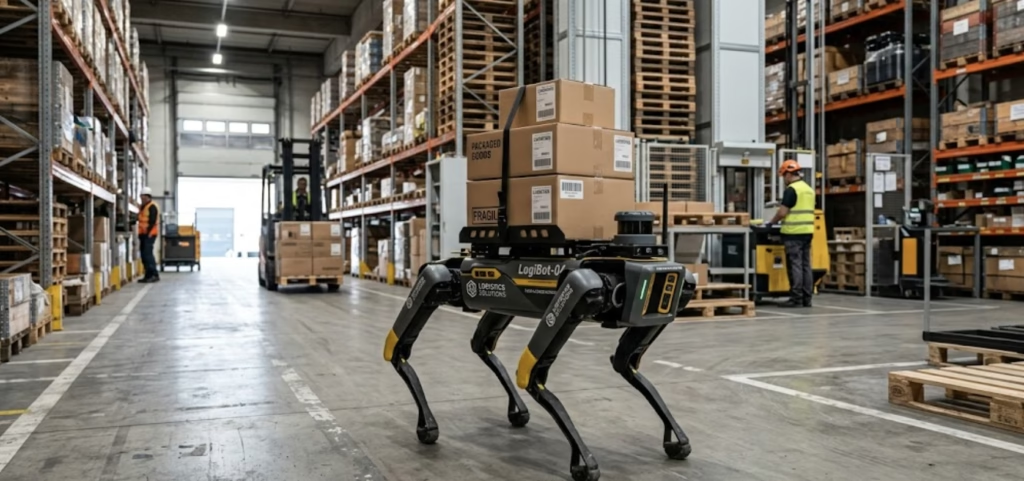
Industry and Logistics: Used for transporting goods, site inspections, and handling operations in industrial settings, adapting to various environmental constraints.
Why Do Quadruped Robots Need High-Rate Batteries?
The primary reason is the demand for high power output. Here are the key factors:
-
Dynamic Power Demands: Activities like walking, running, and jumping consume massive amounts of electricity. Motors require significant power to execute these movements. High-rate batteries provide the high current output needed for rapid acceleration, turning, or climbing, ensuring the robot moves fluidly.
-
Balance and Stability: Maintaining balance is critical. During dynamic motion, a robot must adjust its joints near-instantaneously. High-rate batteries offer the fast-response power support required to maintain stability in real-time.
-
Rapid Response: When executing tasks or responding to user commands/environmental changes, high-rate batteries allow the robot to react more swiftly by delivering immediate high current.
-
High-Performance Maneuvers: Tasks like high jumping or sprinting place extreme power loads on the system. Only high-rate batteries can support this level of intensity.
-
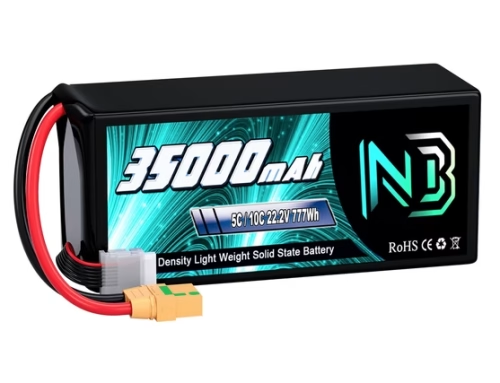
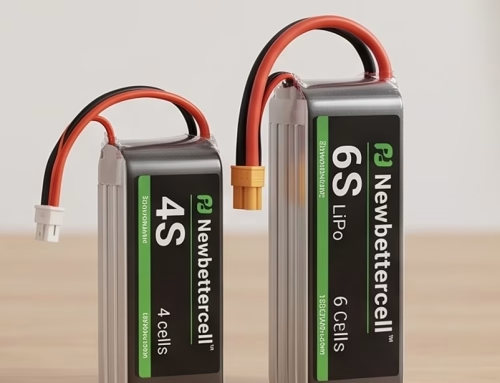
Weight Constraints: Quadruped robots must be agile. High-rate batteries (typically Lithium-Polymer or Li-ion) offer higher energy density and lower weight compared to bulky NiMH or Lead-acid batteries. This weight reduction improves the robot’s payload capacity and speed.
-
Endurance: High-rate batteries can store more energy per unit of volume. Since robots often need to complete long missions like patrolling or searching, high-rate cells ensure they can work longer and more efficiently.
-
Charging Speed: High-rate batteries generally support faster charging. Traditional batteries take hours to recharge, leading to downtime. High-rate technology minimizes idle time, significantly boosting operational productivity.
Summary: High-rate batteries meet the demands of quadruped robots for dynamic movement, balance, rapid response, and high-intensity tasks. By providing high power output and energy density while remaining lightweight, these batteries enable robots to be more efficient, agile, and effective in their respective fields.