What is a Solid-State Drone Battery?
The rapid advancement of drone technology continues to push boundaries—delivering longer flight times, heavier payloads, operation in harsher environments, and enhanced safety. At the core of this evolution lies a critical component: the battery. For years, Lithium-Ion (Li-ion) and Lithium Polymer (LiPo) batteries have been the workhorses of UAVs, but a new contender promises a paradigm shift: the solid-state drone battery.
A solid-state drone battery is an advanced rechargeable battery designed specifically for drones, replacing traditional liquid electrolytes with a solid-state electrolyte (typically made of ceramic, glass, or polymer materials). This structural change results in higher energy density, stronger thermal stability, and a significantly lower risk of leakage or fire compared to liquid batteries. This article explores what a solid-state drone battery is, why it is important, how it compares to Li-ion batteries, and the opportunities and challenges it faces in the future.
What is a Drone Battery?
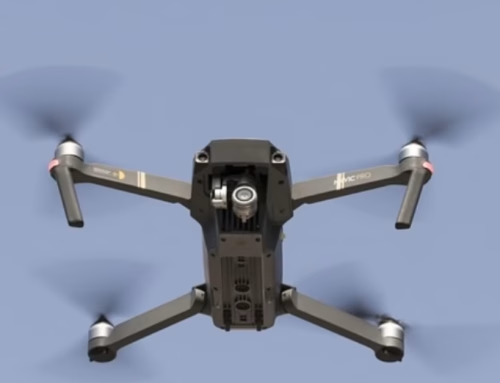
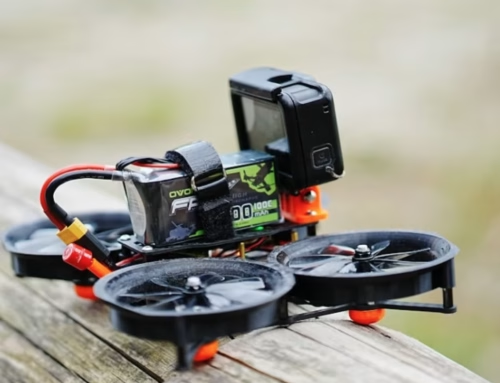
A drone battery is the primary power source that drives a drone’s propulsion system, onboard electronics, and communication modules. Before diving into solid-state technology, it is essential to understand what powers most drones today.
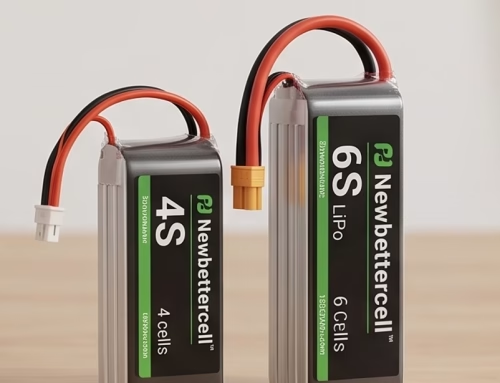
Modern drones overwhelmingly rely on rechargeable lithium batteries, primarily LiPo (Lithium Polymer) or Li-ion (Lithium-Ion) batteries. These batteries strike a good balance between energy density (energy storage per unit weight), power density (output rate), and relatively manageable costs. However, they also possess inherent limitations regarding safety, lifespan, charging speed, and performance in extreme temperatures—limitations that are becoming increasingly critical as drones undertake more essential and demanding missions.
What is a Solid-State Drone Battery?
A solid-state drone battery is an advanced energy storage device that specifically applies Solid-State Battery (SSB) technology to the UAV sector. It represents a fundamental leap in battery chemistry and structure.
The core difference lies in the electrolyte—the medium through which lithium ions flow between the anode (negative electrode) and cathode (positive electrode) during charging and discharging. Unlike traditional batteries, solid-state batteries use a solid electrolyte (such as ceramic, glass, or polymer) instead of a liquid or gel to facilitate ion movement. This seemingly simple change is profound: it offers superior safety, higher energy density, faster charging speeds, and a longer lifespan—all of which are crucial for drone applications.
Why Do We Need Solid-State Drone Batteries?
The drone industry is rapidly expanding across sectors like agriculture, logistics, defense, inspection, and entertainment. These missions demand longer flight times, heavier payloads, and higher safety standards. The push for solid-state batteries stems directly from the limitations of current LiPo battery technology, which create major bottlenecks for the drone industry:
- Limited Flight Time: The energy density of LiPo batteries restricts the flight time of most drones, typically to just 20–40 minutes. This is a major limitation for commercial applications like cargo delivery or large-scale mapping.
- Safety Risks: The liquid electrolyte in LiPo batteries is highly flammable. If a battery is punctured, overcharged, or overheated, it can trigger a dangerous event known as “thermal runaway,” leading to a fire or explosion.
- Lifespan and Degradation: Li-ion batteries degrade over time due to side reactions with the liquid electrolyte and structural changes, resulting in reduced capacity and shorter flight times after a relatively small number of charge cycles.
- Temperature Sensitivity: Performance drops sharply in cold weather, while high temperatures accelerate capacity degradation and increase safety risks.
- Slow Charging Speeds: Charging a drone’s LiPo battery can take an hour or more, leading to long downtimes and requiring operators to purchase multiple expensive battery packs for continuous operation.
Solid-State vs. Li-Ion Drone Batteries: What’s the Difference?
Although both solid-state and Li-ion batteries are based on lithium-ion chemistry, they have fundamental differences in design and performance. The key distinction is the electrolyte: solid-state batteries use non-flammable solid materials, whereas Li-ion batteries rely on liquids or gels that conduct ions.
| Feature | Solid-State Battery | Lithium-ion Battery |
|---|---|---|
| Electrolyte | Solid (Ceramic, Glass, Sulfide, Polymer composite) | Liquid or gel polymer (Flammable organic solvent) |
| Energy Density | 300–450Wh/kg (Potentially up to 400Wh/kg+) | Up to 250Wh/kg |
| Safety | Non-flammable, good thermal stability | Flammable, risk of thermal runaway |
| Cycle Life | Hundreds to approx. 1,000 charge cycles | Thousands of cycles, longer lifespan |
| Charging Speed | Fast, low risk of dendrite formation | Fast, but with a risk of overheating |
| Temperature Range | Broad, stable under extreme conditions | Sensitive to cold and heat |
| Cost & Maturity | Expensive early stage | Affordable, mass-produced |
| Applications | High durability and safety, suitable for harsh environments | General-purpose, versatile |
What are the Advantages of Solid-State Drone Batteries?
Replacing the liquid electrolyte with a solid one brings several game-changing advantages to the UAV industry.
1. Higher Energy Density
Solid-state batteries can store more energy in the same volume or weight. The solid electrolyte allows for the use of a lithium metal anode, which has a much higher energy capacity than the graphite anodes used in Li-ion batteries. For drones, this means:
- Longer Flight Times: Drone flight times could potentially double or even triple.
- Increased Payload Capacity: With a lighter battery offering the same power, drones can carry heavier sensors, cameras, or delivery packages.
2. Enhanced Safety
This is perhaps the most critical advantage. Solid electrolytes are non-flammable and much more stable than liquid electrolytes. This almost entirely eliminates the risk of fires caused by punctures, short circuits, or overheating. This heightened safety is essential for operations in densely populated areas or critical infrastructure inspections.
3. Longer Lifespan and Durability
The solid structure of SSBs is more resistant to the chemical and physical degradation issues common in Li-ion batteries. They can withstand significantly more charge-discharge cycles before performance drops, providing a longer lifespan and a higher return on investment (ROI).
4. Faster Charging Speeds
This stable, solid structure can handle higher currents without the easy formation of dendrites (needle-like structures that can cause short circuits) associated with liquid electrolytes. This significantly reduces charging time, cutting drone downtime from over an hour to potentially just a few minutes.
5. Wider Operating Temperature Range
LiPo batteries perform poorly in extreme cold and degrade quickly in high heat. Solid-state batteries are vastly more stable and operate efficiently across a much wider temperature range, making them ideal for year-round outdoor operations.
6. Design Flexibility
Solid electrolytes offer the potential for thinner, lighter, or more structurally integrated battery designs, providing drone manufacturers with exciting new possibilities for airframe optimization.
7. Environmental Benefits
Reducing the use of toxic liquid chemicals and extending the overall battery lifespan helps decrease electronic waste and global resource consumption.
Which Drone Applications Will Benefit the Most?
While all UAVs will benefit, certain specific applications will experience a transformative impact:
- Commercial Delivery (Urban and Long-Haul): Safety is paramount when operating in densely populated areas. Extended ranges make previously impossible delivery routes viable, while faster charging speeds dramatically improve fleet utilization.
- Emergency Response & Public Safety (Search & Rescue, Firefighting): Longer flight times mean extended search ranges and continuous fire monitoring. Reliability and safety are crucial in harsh, high-pressure environments. Faster charging allows drones to get back in the air quicker during a crisis.
- Industrial Inspection (Power Lines, Wind Turbines, Pipelines): Longer flight distances reduce the number of battery swaps needed for large-scale inspections. They offer superior performance in freezing (offshore wind farms) or scorching (desert pipelines) environments and improve safety near critical infrastructure.
- Advanced Air Mobility (eVTOL / AAM): Although larger than typical drones, their core battery requirements are similar. Safety, extreme energy density, and fast charging are absolutely vital for passenger-carrying eVTOLs. Solid-state batteries are the key enabling technology for this future.
What Are the Challenges Facing Solid-State Drone Batteries?
Despite the promising outlook, several hurdles remain before widespread adoption can occur:
- Manufacturing Complexity and Cost: Mass-producing defect-free solid electrolytes (especially ceramics) is highly challenging and expensive. Current costs are prohibitive for most consumer drone applications. Scaling up production while driving down costs is essential.
- Interfacial Stability: Ensuring a stable, low-resistance interface between the solid electrolyte and solid electrodes (anode and cathode) over thousands of cycles is challenging. Degradation at these interfaces can limit performance and lifespan
- Material Selection and Performance: Different solid electrolyte materials (oxides, sulfides, polymers) have their own pros and cons regarding ionic conductivity, stability, mechanical properties, and manufacturability. Optimization for specific drone needs (power output vs. weight) is ongoing.
- Charging Speeds in Early Designs: Interfacial resistance in some early solid-state designs actually resulted in slower charging times, a hurdle engineers are actively working to overcome.
- Integration and Form Factor: Adapting solid-state batteries into the specific shapes, sizes, and thermal management systems required by various drone platforms requires significant engineering effort.
- Supply Chain Development: A robust supply chain for new materials and manufacturing processes needs to be established and scaled.
Conclusion
Solid-state drone batteries represent not just a technological advancement, but a revolutionary change in UAV power systems. As R&D and industrial investments continue to grow, we can expect these batteries to bring longer flight times, stronger payload capacities, and safer operational experiences to all fields relying on drones—from environmental monitoring to emergency response.
As a global leading UAV battery manufacturer, Newbettercell has always been dedicated to the research and development of high-performance solid-state drone batteries. We currently have the capability to mass-produce semi-solid state batteries with energy densities reaching 270~320 Wh/kg, significantly extending your drone’s flight time and enhancing payload capacity for any mission.