Qu'est-ce qu'une batterie LiPo 6S ?
Lithium Polymer (LiPo) batteries are widely used in drones, RC vehicles, and various other fields due to their lightweight, high energy density, and powerful output. Among them, the 6S LiPo battery is particularly popular. This guide will explore its specifications, types, and applications.
What Does “6S” Mean in a LiPo Battery?
“6S” refers to the battery configuration, where 6 cells are connected in series. This configuration increases the total voltage because the voltage of each cell adds up. The “S” stands for series, which boosts the voltage. The nominal voltage of each single cell is 3.7V, and adding them together gives the total voltage of the battery pack.
What is the Voltage of a 6S LiPo Battery?
As mentioned above, the nominal voltage of a 6S LiPo battery is 22.2 volts (3.7V × 6). However, the actual voltage fluctuates depending on the State of Charge (SOC). Typically, LiPo batteries have a nominal voltage, a fully charged voltage, and a safe discharge voltage.
Nominal Voltage: 22.2V (6 × 3.7V)
Fully Charged Voltage: 25.2V (6 × 4.2V)
Safe Discharge Voltage: 18.0V (6 × 3.0V)
What is the Capacity of a 6S LiPo Battery?
Capacity, measured in milliampere-hours (mAh) or ampere-hours (Ah), determines how long the battery can supply power at a given current. Common capacities range from 1000mAh to 20,000mAh or higher.
Choosing the Right Capacity:
RC Airplanes/Drones: Small drones typically use 3000–6000mAh batteries to balance flight time and weight.
Industrial Applications: Heavy-duty drones may require capacities of 20,000mAh or higher.
While higher capacity provides longer runtimes, it also increases weight, which can negatively affect performance. When choosing capacity, you should carefully consider the specific power consumption needs of your device and the trade-off between runtime and weight.
What is the Discharge Rate of a 6S LiPo Battery?
The discharge rate, indicated by the “C-rating,” represents how fast the battery can safely release current. The higher the C-rating, the faster the discharge. For example, a 5000mAh battery with a 50C rating can provide 250A of continuous current (50 × 5A).
Choosing the C-Rating:
RC Vehicles: High C-ratings (50C–100C) deliver the burst power needed for extreme acceleration.
Drones: Medium C-ratings (20C–50C) provide stable power delivery without the risk of overheating.
High-power applications require batteries with higher C-ratings. However, pushing a battery to its maximum C-rating limit will shorten its lifespan. Always ensure the battery’s C-rating comfortably matches the current demands of your system.
How Long Does a 6S LiPo Battery Last?
The lifespan of a 6S LiPo battery depends heavily on how it is used, charged, and stored. Proper care and maintenance can significantly extend its service life. Typically, a well-maintained battery can go through hundreds of charge-discharge cycles before a noticeable drop in performance occurs. Proper care includes avoiding deep discharges, storing the battery at its optimal storage voltage, and maintaining appropriate temperatures during use.
6S LiPo Battery Types: Standard 6S LiPo vs. 6S Semi-Solid State Batteries
Standard 6S LiPo Batteries: These traditional LiPo batteries are known for their high energy density and lightweight design, commonly used in consumer drones and RC vehicles. Compared to advanced battery types, standard 6S LiPo batteries feature higher discharge rates, lower manufacturing costs, and relatively lower energy densities.
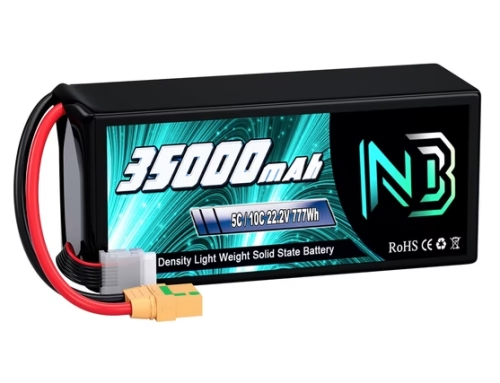
Semi-Solid State Batteries: This emerging technology offers higher safety and a longer lifespan compared to standard LiPo batteries. Utilizing advanced chemistry, they feature a much higher energy density (up to 350Wh/kg) and are significantly safer and more stable due to reduced thermal runaway risks. They are ideal for industrial drones, medical supply delivery, and long-range UAVs.
What is the Difference Between 4S and 6S LiPo Batteries?
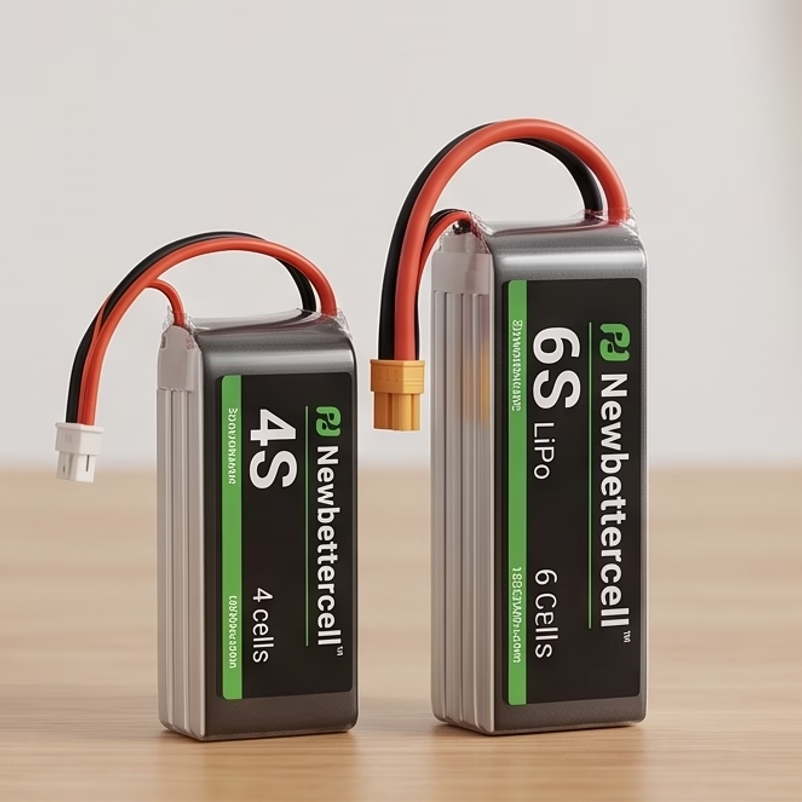
The main differences between 4S and 6S LiPo batteries lie in their voltage output and application scope. Because 6S batteries contain more cells, they provide a significantly higher power output.
Voltage Comparison:
4S LiPo: Nominal voltage 14.8V, Fully charged voltage 16.8V.
6S LiPo: Nominal voltage 22.2V, Fully charged voltage 25.2V.
Applications of 6S LiPo Batteries
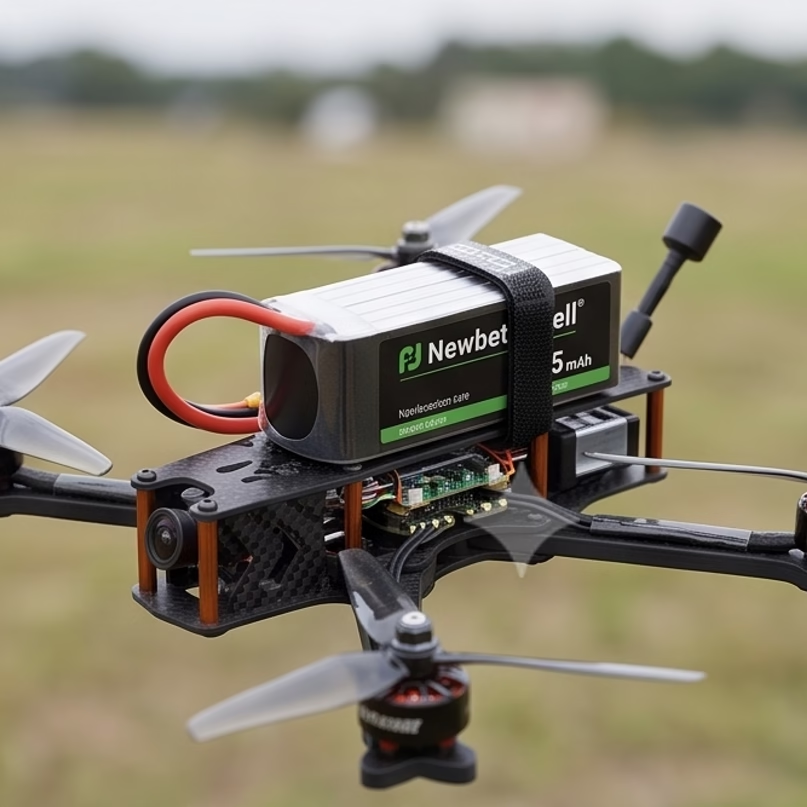
Drones: FPV racing, aerial photography, and heavy-lift multicopters.
RC Vehicles: Cars, boats, helicopters, and airplanes requiring high speed and torque.
Hobbyist Robotics: Used for powering combat robots and other robotic devices.
Industrial Sector: Delivery drones, infrastructure inspection drones, and mapping UAVs.
Medical: Emergency medical supply transport using high-energy semi-solid state variants.
Power Tools: Some high-power cordless industrial tools utilize 6S LiPo batteries.
Conclusion
6S LiPo batteries are highly versatile and powerful energy solutions. Choosing the right capacity, discharge rate, and battery type is crucial for optimizing your device’s performance and extending the battery’s lifespan. Whether you are operating an FPV racing drone or an industrial UAV, understanding these battery specifications ensures better performance and safety.
As a leading global LiPo battery manufacturer, Newbettercell provides professional standard and customizable 6S LiPo drone batteries, as well as cutting-edge semi-solid state battery solutions, perfectly tailored to meet the rigorous demands of various consumer and industrial applications.
FAQ
Q1: Can I charge a 6S LiPo battery with any standard charger?
No, you must use a specific LiPo balance charger capable of charging 6-cell (22.2V) batteries. Using a non-LiPo charger or the wrong settings can lead to battery damage or a fire.
Q2: What happens if my 6S LiPo battery voltage drops below 18.0V?
Discharging a 6S battery below 18.0V (3.0V per cell) causes irreversible chemical damage to the cells. This results in puffed batteries, permanently reduced capacity, and potential safety hazards.
Q3: How should I properly store a 6S LiPo battery when not in use?
If you aren’t using the battery for more than a few days, put it in “Storage Mode” using your balance charger, which sets the voltage to roughly 22.8V (3.8V per cell). Store it in a fireproof LiPo bag in a cool, dry place.
Q4: Can I upgrade my 4S drone by simply plugging in a 6S battery?
Generally, no. You must first ensure that your drone’s Electronic Speed Controllers (ESCs) and motors are rated to handle the higher 22.2V of a 6S battery. Plugging a 6S battery into a 4S system will likely fry the electronics.
Q5: How long does it take to fully charge a 6S 5000mAh LiPo battery?
At a safe 1C charge rate (which is 5.0 Amps for a 5000mAh battery), it will take approximately one hour to charge a fully depleted battery back to 100%.
Q6: Are 6S semi-solid state batteries better than standard LiPo batteries?
It depends on your needs. Semi-solid state batteries offer superior energy density (longer flight times) and enhanced safety. However, standard LiPo batteries are currently better for applications that require massive burst power (high C-ratings), like FPV racing.
Q7: What should I do if my 6S LiPo battery starts swelling or puffing?
Stop using it immediately. Swelling is a sign of internal cell damage and gas buildup, making the battery a severe fire risk. Do not attempt to charge or discharge it; safely dispose of it at a designated battery recycling facility.