What is the C Rating of a Lithium Polymer Battery?
Lithium Polymer (LiPo) batteries have become the preferred power source for a wide range of electronic devices, including remote-controlled vehicles, drones, and various portable gadgets. Among the key specifications associated with LiPo batteries, the C rating stands out as a critical factor that directly impacts their performance. In this article, we will dive into what the C rating means, how to calculate it, and explore the significance and applications of high C rating LiPo batteries.
What is the C Rating of a Lithium Polymer Battery?
The C rating, or discharge rate, of a lithium polymer battery measures its ability to deliver current. It is expressed as a multiple of the battery’s capacity, denoted by the letter “C.” In simple terms, the C rating indicates how quickly a battery can release its stored energy. The discharge time varies depending on the C rating: a 1C rating corresponds to a 60-minute discharge, a 0.5C rating to 120 minutes, and a 2C rating to 30 minutes. This specification plays a pivotal role in determining a battery’s performance and suitability for specific applications. Understanding the C rating is essential for selecting the right battery to ensure optimal performance.
The following table summarizes different C ratings and their corresponding discharge times:
| C Rating | Discharge Time |
|---|---|
| 1C | 1 hour |
| 2C | 30 minutes |
| 5C | 12 minutes |
| 10C | 6 minutes |
| 20C | 3 minutes |
| 30C | 2 minutes |
| 0.5C | 2 hours |
| 0.2C | 5 hours |
| 0.1C | 10 hours |
How to Calculate the C Rating of a Lithium Polymer Battery?
To understand and calculate the C rating, you first need to grasp the concept of battery capacity. Capacity is typically measured in milliampere-hours (mAh) or ampere-hours (Ah), representing the amount of charge a battery can store. For example, a 2200mAh battery can theoretically deliver 2200 milliamps (or 2.2 amps) of current for one hour.
The C rating is calculated by dividing the discharge current (the rate at which current is drawn from the battery) by the battery’s capacity. The formula is:
C Rating = Discharge Current ÷ Capacity
Here, the discharge current reflects how quickly the battery is depleted during use. The result gives you the C rating, a multiplier indicating how many times the battery’s capacity is discharged within one hour.
For example, if you have a 2200mAh LiPo battery and it is discharged at a rate of 20 amps, the C rating is calculated as follows:
C Rating = 20A ÷ 2.2Ah = 9.09C
In this case, the battery’s C rating is approximately 9.09C.
A higher C rating indicates that the battery can discharge at a faster rate, making it suitable for applications requiring rapid bursts of power or high-performance scenarios.
What’s a High C Rate LiPo Battery?
A high C rate LiPo battery designed to handle significantly higher discharge currents compared to standard batteries. In practical terms, these batteries can deliver greater power in a shorter time, making them ideal for applications that demand quick energy bursts or high-performance requirements. High C rating batteries are particularly popular among radio-controlled (RC) hobbyists and drone pilots who need rapid acceleration, agile maneuverability, and high-speed performance.
Applications of High C Rating Lithium Polymer Batteries
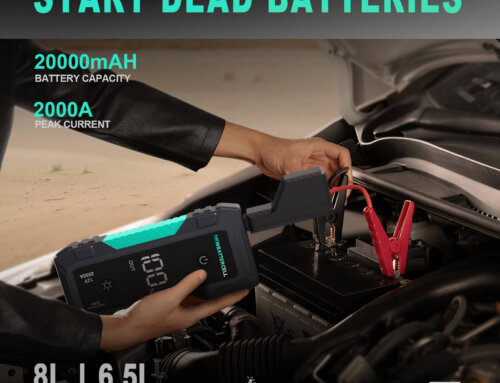
A growing number of applications and devices rely on high C rating LiPo batteries. These include both industrial and consumer sectors, such as remote-controlled models, drones, robotics, and vehicle emergency starters. In all these scenarios, rapid and powerful energy release is required within a short timeframe. For example, many emergency starters may require discharge rates as high as 35C, while in the RC industry, batteries with discharge rates up to 50C are commonly used. Some batteries on the market claim even higher C ratings based on maximum pulse discharge rates, which allow the battery to fully discharge in just a few seconds. However, it’s important to note that most applications do not require such extreme C ratings. If you need assistance in selecting the right battery for your application, feel free to contact our application engineers.
Conclusion
In summary, the C rating of a lithium polymer battery is a critical specification that directly affects its performance across various applications. Understanding how to calculate the C rating and recognizing the importance of high C rating LiPo batteries empowers users to make informed choices based on their specific power requirements. Whether you’re a drone enthusiast, an RC racer, or someone needing high-performance portable power, the C rating is a key factor in achieving optimal results. As a global leader in LiFePO4 cell manufacturing, Newbettercell offers specialized customization solutions for high C rating LiPo batteries and battery management systems (BMS) to meet your specific application needs. If you have any questions or requirements, please don’t hesitate to contact us.